

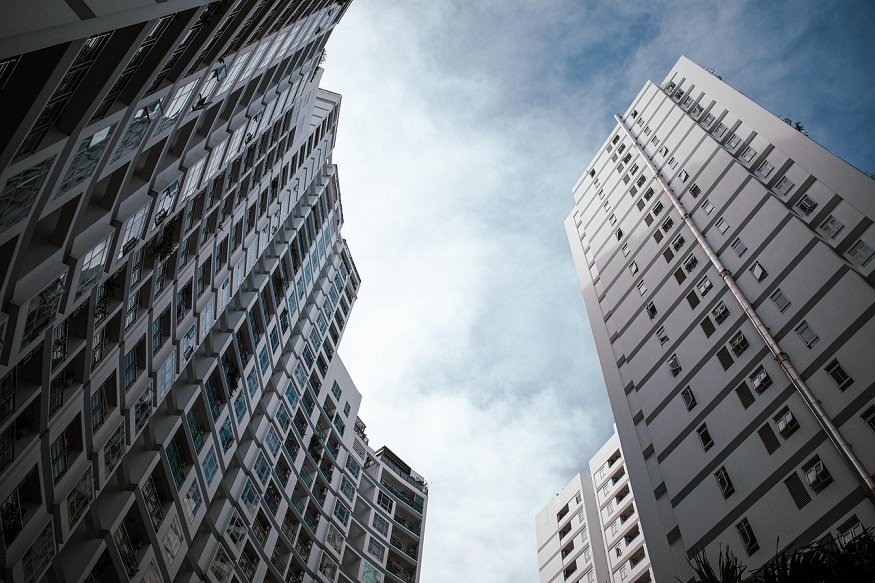
Drive along almost any arterial road on the Gold Coast right now and you’ll pass at least one crane. Ask most locals why, and you’ll get a shrug and something about “the place just growing.” That answer isn’t wrong exactly, but it misses the more useful story underneath — this isn’t random growth. It’s demand that’s been building for years, meeting a planning framework that’s now actively steering more of it into apartments rather than houses.
For buyers and investors, that distinction matters more than it sounds like it should. Random growth is impossible to time. Planned, structural demand isn’t — and understanding what’s actually driving the current wave of towers is the difference between acting early in a growth corridor and paying growth-corridor prices after everyone else has already noticed.
The Apartment Boom Buyers and Investors Are Noticing
The visible signs are everywhere: more cranes on the skyline, more site hoardings going up along the light rail corridor, more auction results referencing off-the-plan stock rather than established houses. Locals notice it as congestion and construction noise. Investors who’ve been paying closer attention notice it as something else — a market shifting shape, not just growing in place.
Read More: Benefits of Regular Mutual Fund Investing
The mistake a lot of buyers make is treating every one of these projects as interchangeable, as if “more apartments” is a single, uniform trend. It isn’t. Some of it is opportunistic development chasing a hot market. A meaningful chunk of it, though, is a direct response to population numbers and planning settings that have been pointing toward higher-density living for a while now — and that’s the part worth actually understanding before deciding where, or whether, to buy in.
Queensland’s Population Growth Is Reshaping the Gold Coast
Start with the numbers, because they explain more than any amount of anecdotal “the Coast is booming” commentary. Recent Queensland population growth trends and interstate migration to Queensland figures tell a clear story:
- 76% annual population growth in the 2024–25 financial year — among the fastest of any state or territory in the country, according to the Queensland Government Statistician’s Office.
- Around 21,600 people gained through net interstate migration in 2024–25 alone.
- New South Wales supplied more than 60% of that net interstate gain.
- Positive net interstate migration every single quarter since 1981 — a structural trend, not a pandemic-era blip that was always going to fade.
A large share of that inflow lands in South East Queensland, and the Gold Coast, with its lifestyle appeal and relative affordability next to Sydney and Melbourne, captures more than its fair share of people moving for exactly that reason.
Limited Land, Rising Demand: Why Density Is Increasing
Population growth on its own doesn’t automatically mean apartments — it could just as easily mean more houses spreading further inland. What tips the balance toward density on the Gold Coast is geography. The city is a narrow strip squeezed between the coastline and the hinterland, and most of the easily developable broadacre land within a reasonable commute of the beach has already been used. What’s left tends to be smaller, tighter, and considerably more expensive per square metre than it was a decade ago.
When land gets scarce and expensive, the maths shifts. Spreading a project sideways across a single-storey footprint stops making financial sense; building upward starts to. This is exactly why Gold Coast apartment market growth has accelerated in established suburbs rather than new greenfield estates — councils are actively supporting higher-density approvals in areas already serviced by transport, schools, and infrastructure, because it’s a far more efficient use of land than pushing development further and further from the coast. It’s a rational planning response to a genuine supply constraint, not a fad.
What’s Being Built: New Apartment Developments Across the Gold Coast
Walk through the current pipeline and a pattern emerges fairly quickly. The wave of new apartment developments in Gold Coast suburbs typically includes:
- Two- to three-bedroom apartments as the standard offering, aimed at owner-occupiers and downsizers rather than pure investor stock.
- A cluster of high-end apartments at the top of the market, chasing buyers who’d otherwise be looking at Sydney or Melbourne prices for a fraction of the space.
- Boutique, design-led buildings rather than the high-volume towers of previous cycles.
Most of this activity is concentrated in beachside and near-beach suburbs, with multiple projects underway at once in:
- Broadbeach
- Palm Beach
- Burleigh Heads
- Surfers Paradise
- Miami
Gold Coast high-rise apartments for sale in these pockets increasingly favour smaller, premium-positioned buildings over high-volume towers. Genuine mid-market volume product, oddly, has become the scarcer end of the spectrum, squeezed out by rising construction costs.
Why Good Design Matters More as Supply Increases
More apartments on the market changes the competitive dynamic for anyone building or selling one. When there were only a handful of towers in a suburb, almost anything with a view sold. With dozens of buildings now competing for the same buyer pool, mediocre layouts, awkward floor plans, and generic finishes sit on the market noticeably longer than they used to.
That’s pushed design quality from a nice-to-have into something closer to a commercial necessity. A well-considered, sellable apartment building design — one that actually accounts for cross-ventilation, storage, balcony usability, and how a floor plan photographs for a listing — moves faster and commands a stronger price than a technically compliant but uninspired layout in the same postcode. Buyers comparing five near-identical towers within walking distance of each other are, whether they realise it or not, quietly ranking them on exactly these details.
Read More: Building Financial Discipline through Equity Investing in India
What This Growth Means for Buyers and Investors
None of this is purely academic for anyone actually weighing up where to put their money. Suburbs experiencing genuine apartment market growth tend to show two fairly reliable patterns:
- Underlying land values climb faster than the Gold Coast average.
- Well-designed stock sells noticeably quicker once it hits the market, particularly in walkable, transport-connected locations.
Developers who move into these growth corridors early are the ones who typically secure sites at pre-boom land prices and lock in approvals before councils tighten planning settings further in response to community pushback over height and density — a genuine live issue on the Coast right now, with recent court decisions putting some existing approval pathways under fresh scrutiny. Waiting for a suburb to be obviously “hot” before acting usually means paying a premium for land that a more attentive buyer secured two years earlier, at a fraction of the price, simply by understanding which way the population and planning settings were already pointing.
See How Tactica Has Helped Shape Gold Coast Developments
Understanding the trend is one thing; translating it into a specific site, a specific approval pathway, and a specific design that actually sells is another. This is where a track record matters more than a general market overview, since the practical questions — what will council actually approve on this parcel, what unit mix will the local buyer pool respond to, what’s realistic given current construction costs — are always site-specific rather than generic.
A look through Tactica Planning and Development projects gives a useful sense of what’s actually been approved and delivered across the region recently, rather than just what’s been proposed, which is a meaningfully different and more useful data point when you’re trying to judge what a council will realistically sign off on for your own site.
Considering an Apartment Development? Get Your Site Assessed
If you’re sitting on land that might suit higher-density use, or eyeing a site because it looks like it’s in the path of the current growth wave, the worst move is guessing. A block that looks obviously suited to apartments can come with a zoning constraint, an overlay, or a council policy that rules out exactly the outcome you had in mind — and that’s far cheaper to discover before you’ve bought the site than after.
A proper residential apartment building development feasibility check looks at zoning, overlays, likely yield, and current council appetite before you commit to anything, so you’re working from an actual answer rather than an assumption.
If you’re weighing up a site now, it’s worth talking to a team offering genuine Gold Coast town planning services before land prices catch up to where the demand already is — because on current trends, they will.